Failed Crack Repair in a Marble Dining Table, Redone and Re-Coated in Coney Island
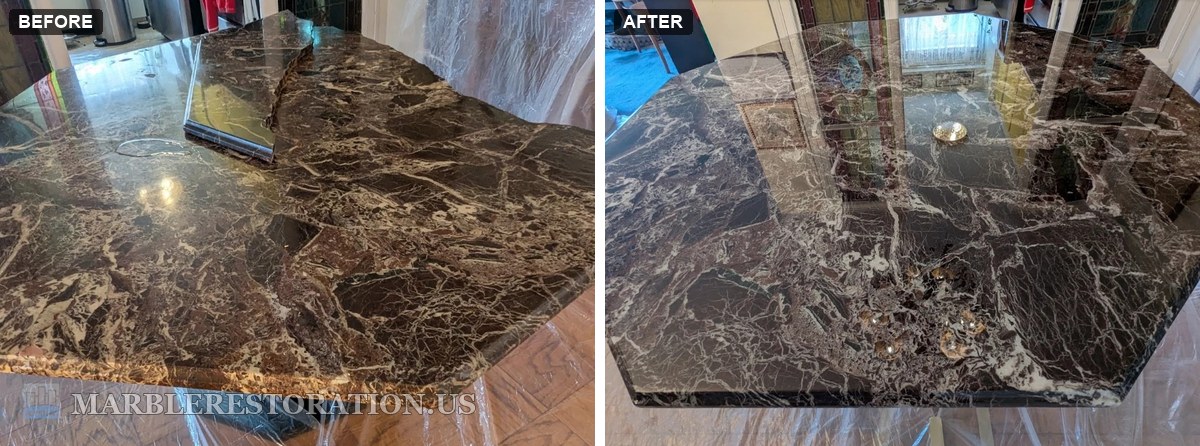
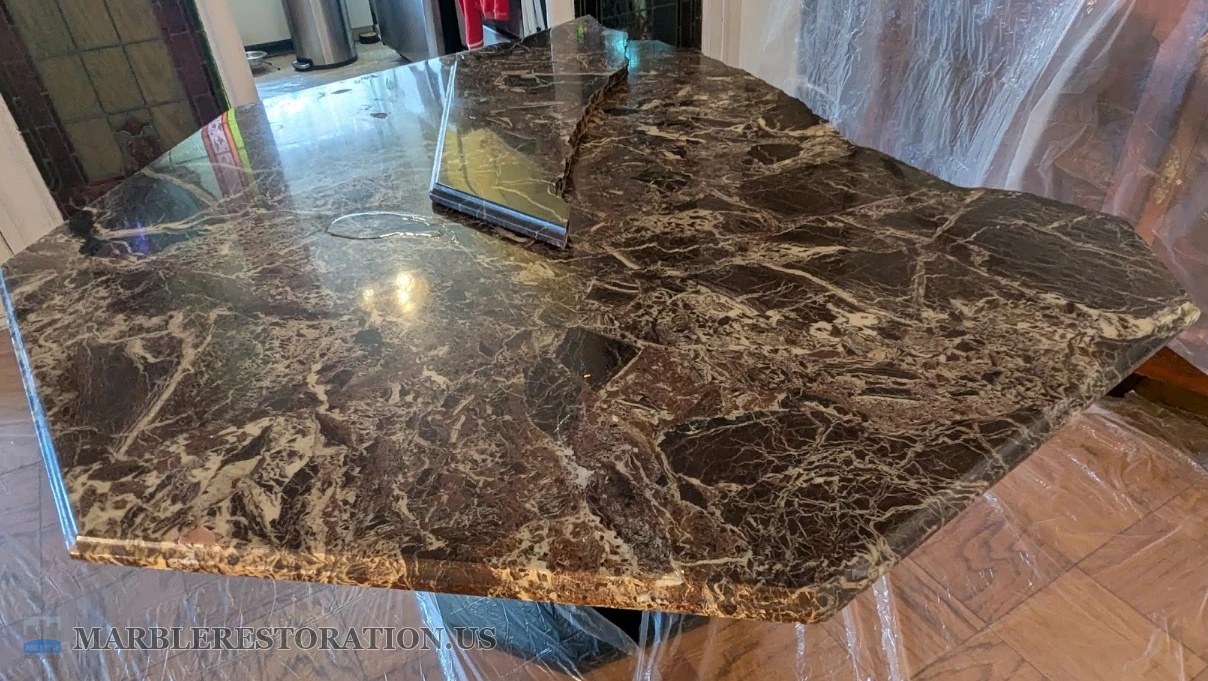
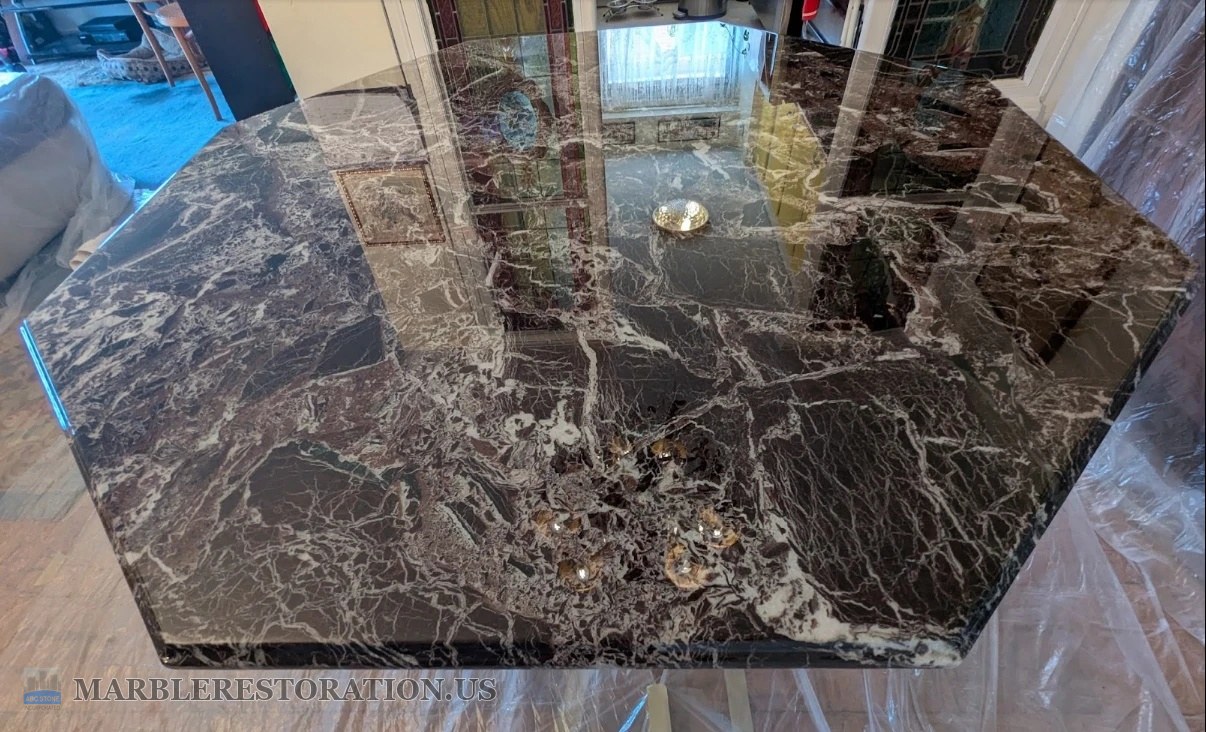
An octagonal marble dining table, about 50 inches across, cracked and broke off in a big chunk where a previous repair had failed. The first crack repair was done about 20 years ago. The owners caught the piece before it dropped to the floor, so the table and the broken piece were both whole. The top looks like Rosso Levanto, or a similar dark red marble with white veins, and it has a clear coat on it. Over the years that coat turned yellow. I took the old coat off, set the broken piece back level with colored epoxy, filled the crack in full and put a new coat of transparent polyester resin on the whole top. It took one day at the owner’s apartment in Coney Island, Brooklyn, NY 11224, Kings County, on the south shore of Brooklyn.
A crack repair that held for 20 years, then gave way
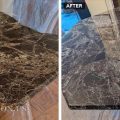
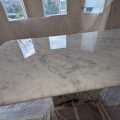
In the before photo the piece is back on the table, but it sits higher than the rest of the top and the break line is open. The piece that broke off is about 2 feet long. It broke right where the old repair was. Epoxy in stone is as strong as marble, or even stronger. But over the years it can get weaker from normal fatigue, or crack again from too much pressure in one spot. Twenty years is a long time for a repair to hold.
Two ways to fix it, and why I recommended the longer one
A crack in a coated table can be fixed two ways. The short way is to glue the piece and fill the crack with colored epoxy, and leave the coat as it is. It is quicker and costs less, but the crack line comes out very visible and uneven. The coat is a clear layer of resin on top of the marble. Along a repair it can’t be sanded and polished to a smooth gloss the way bare marble can.
The proper way is to strip the old coat, fix the crack on the bare marble, then coat the whole top again with transparent polyester resin. The new coat goes over the repair in one even layer. The owner chose the proper way.
Metal rods, offered and not needed
I also offered to make the crack stronger from the underside. That means cutting channels in the back of the slab and setting three metal rods in them. For that the top has to come off its base and lie upside down on the floor. The owner said no, and for a good reason. The top only sits on its base, it is not bolted, and the base is wide. Anything strong enough to crack the top would tip the table over first. A wide base or plate under a top does a lot of the support work, so I agreed.
How the day went
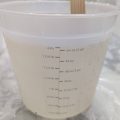
The floor and everything around the table were covered with plastic first. Then the old coat came off. It had turned yellow from UV light over the years, and you can see the color in the pile of old coat in the photo below.
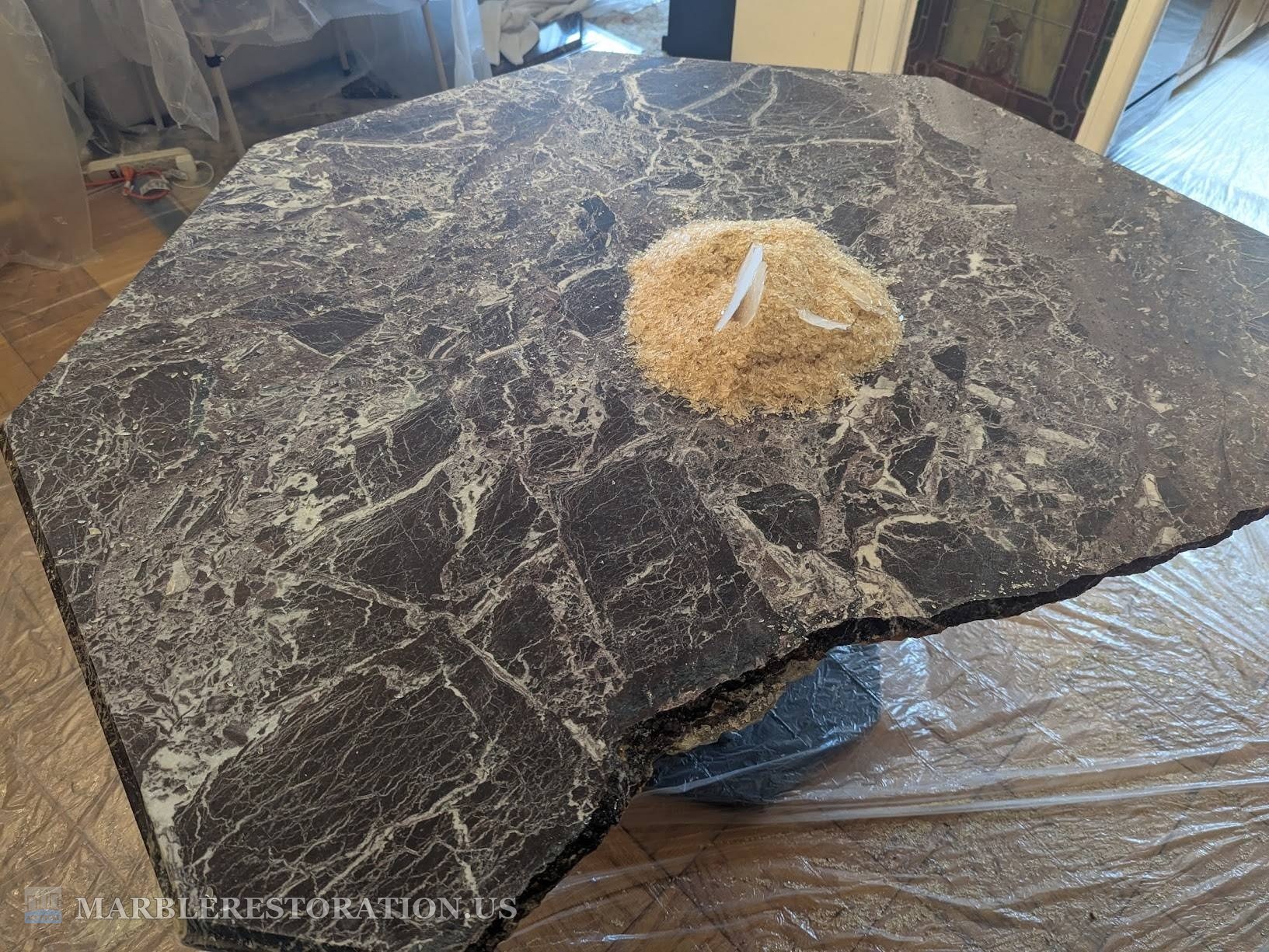
Before any gluing, I cleaned the old glue from the first repair off the break. Nobody knows what glue went in 20 years ago, and old unknown glue left in a break can make the whole new repair weaker.
Then the broken piece went back on with colored epoxy. The piece and the top have to meet flat on the surface, so I clamped the piece, set it level with a long level across the break and held it there while the epoxy set.
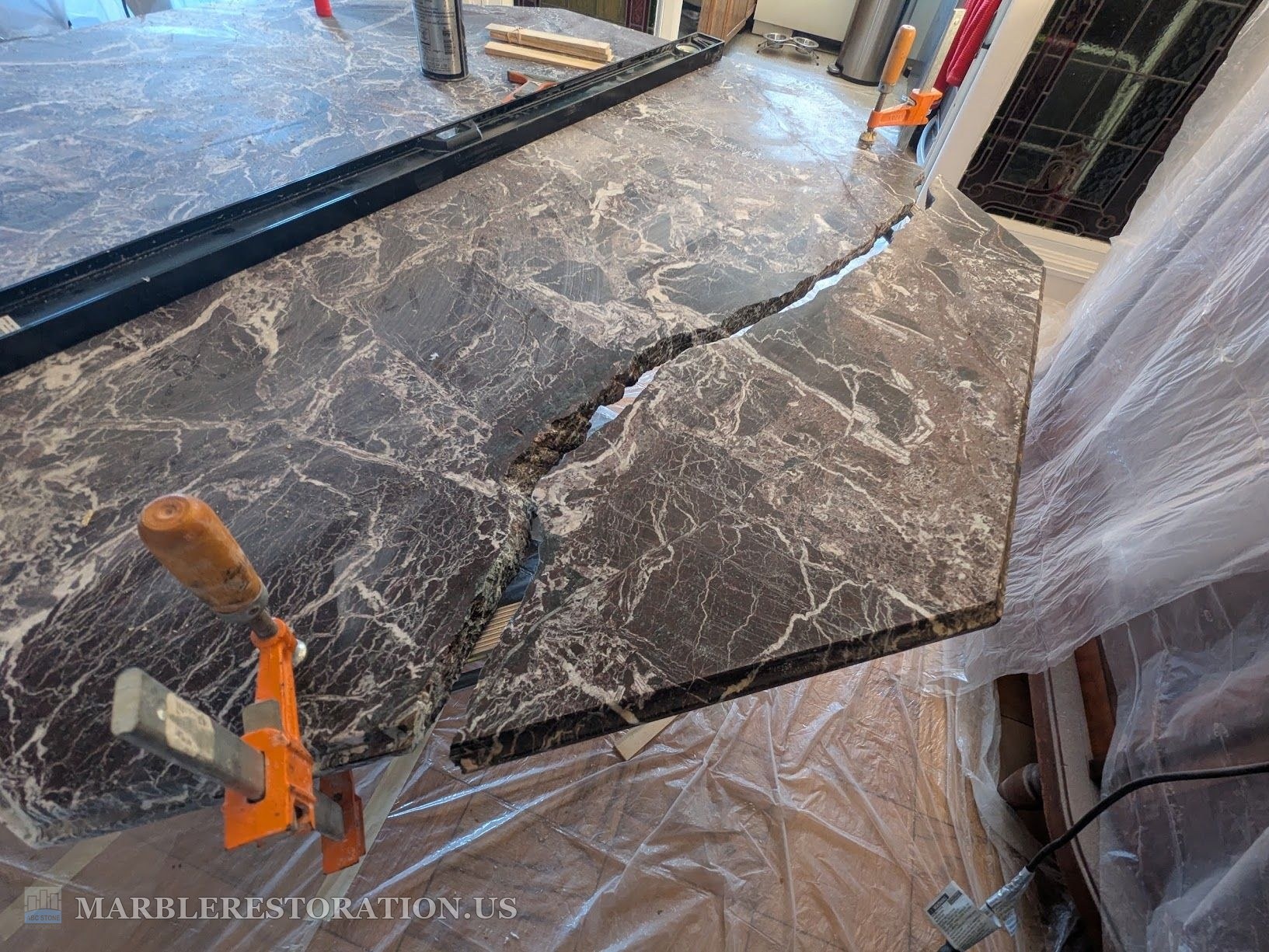
Once the piece was set, I filled the crack in full with flowing epoxy. Flowing (liquid) epoxy is thin. It runs down into the crack and fills it through the whole thickness of the slab, not only at the top.
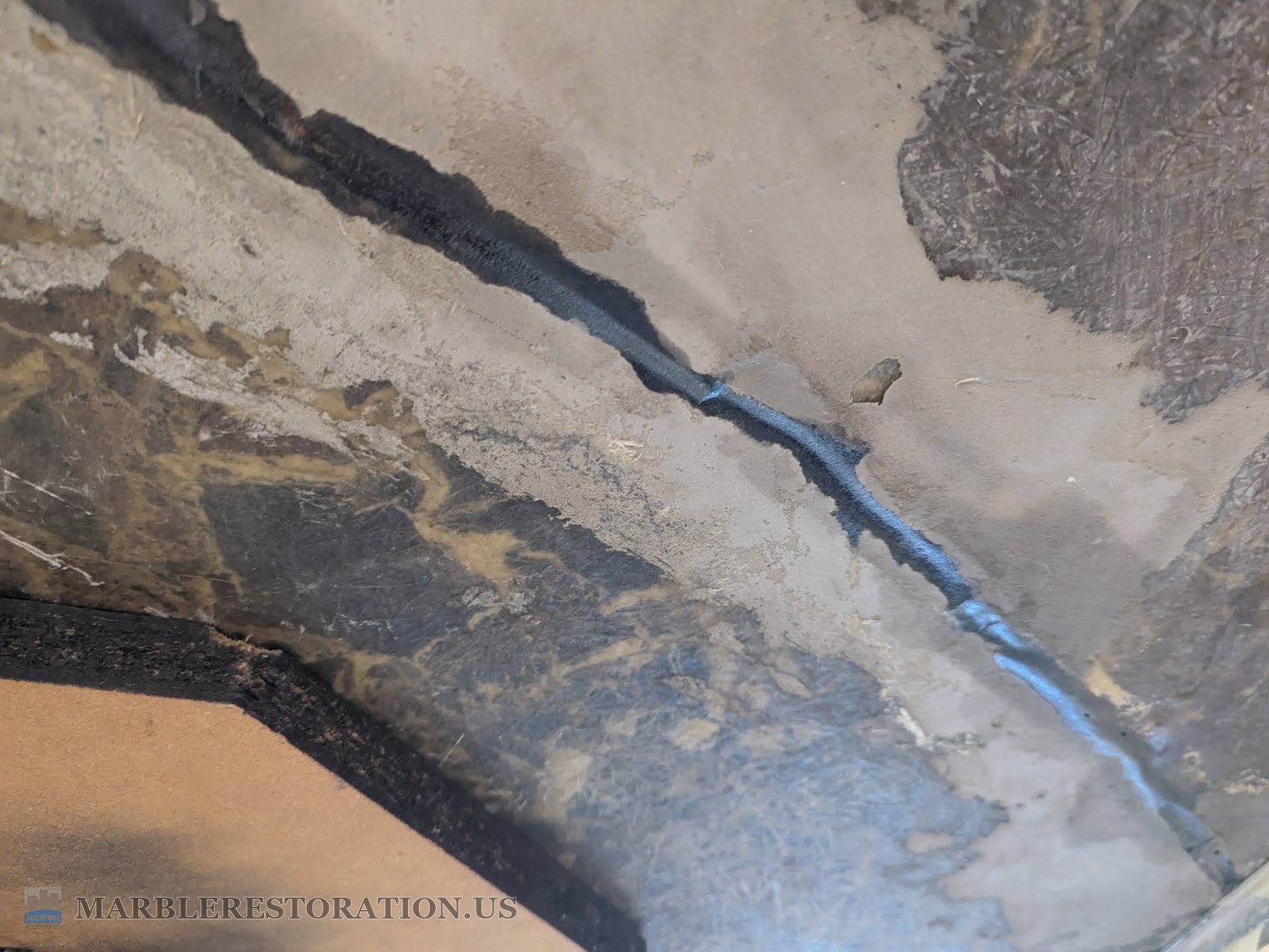
Last, I prepared the bare marble and put the new coat of transparent polyester resin over the whole top. The whole job took one day.
What the owner was told before the work
Before any work, the estimate said:
- The crack line can be noticeable.
- The epoxy makes the table strong enough for normal use for years. But like the first repair, it can crack again, in the same place or a new one, from too much pressure or from fatigue over time. There is no guarantee.
- The new coat can have tiny imperfections, like dust, particles, small bubbles or waves.
- The new coat can be scratched or chipped, same as the original one.
On this table it came out better than that. The crack line is near invisible. The new coat helps hide it, but even without the coat it would be hard to find, because this stone has a lot of natural veins. The one limit that stays is that the crack can still open again.
Coated tops, cracks and broken pieces
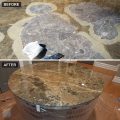
On a coated top, a peeling coat, a crack and a broken edge all end with a new coat, like this peeling resin coating on a marble table re-coated in New Jersey. A crack that goes all the way through a slab gets flowing epoxy the same way, like a crack through a black marble coffee table in Tribeca. An onyx dining table broken in half was glued back too.
Questions people ask about coated marble tables
Will the new coat turn yellow like the old one?
Over time it can turn slightly yellow, because all resins eventually yellow. The coat I use is UV resistant, which slows the yellowing down, but no resin stays clear forever.
How soon can we use the table after re-coating?
The coat cures in 24 hours, and the full cure takes 7 days.
Can a coated table be made matte?
No. A coat can’t be honed to a matte finish. The result is high gloss only.
Does re-coating make a lot of dust?
Almost none. The old coat comes off in flakes onto the drop cloth, it’s not a sanding job. The dust rule goes the other way: for at least 12 hours after the coat goes on, the room has to stay clean so nothing lands in the wet coat.
If your marble table broke at an old repair, or its coat turned yellow, send me a few photos of the whole table and the break, and the size. I’m based in Brooklyn and work all over Brooklyn and New York City. Email info@marblerestoration.us.
Submit Your Order or Ask a Question:
You'll get a response within a few minutes or hours and usually not longer than 24 hours.
 Transparent Coat Flake off Repair on Dining Table
 Coffee Table Coated by Transparent Epoxy Polyester
 Chipped Clear Coat on a Saarinen Marble Table, Filled in Sagaponack, NY. Before and After
 Peeling Resin Coating on a Marble Table in Monmouth Junction, NJ.
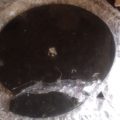 Knoll Saarinen Coffee Table.
Chip and Crack
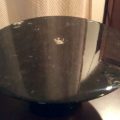 Knoll Saarinen Table Laminating. Clear Finish
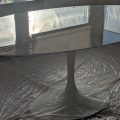 Table Re-Coating Service with Transparent Polyester Resin
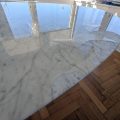 Eero Saarinen Oval 78″ Table – Aged Peel Off
 Knoll Saarinen Marble Table Recoating: Full Strip-and-Recoat Process
 UV-Resistant Clear Epoxy Applied
 Honed Table Before Coating with Transparent Polyester
 Pitted & Weathered Marble Windowsill Before Polyester Resin Coating
New Coat on Eero Saarinen Oval 78″ Table
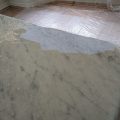 Yellow Coat Mechanical Delamination
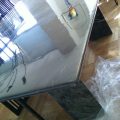 Restored Transparent Polyester on Broken Corner
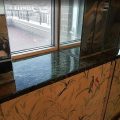 Marble Windowsill High-Gloss Finish After Transparent Polyester Coating