Dull Black Marble Vanity Top Refinished in Midtown Manhattan
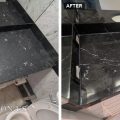
The owner wrote in with a black marble bathroom counter top that needed to be refinished. It is a Nero Marquina double sink vanity, the black marble with the white veins and the pale fossil flecks, in a high-rise apartment in Midtown Manhattan, NY 10019, in New York County, New York City. The black had gone gray. A dull haze sat over most of the top, with lighter gray spots around both sinks and around the faucet, some scratches, and cracks across one end with small loose chunks sitting in them.
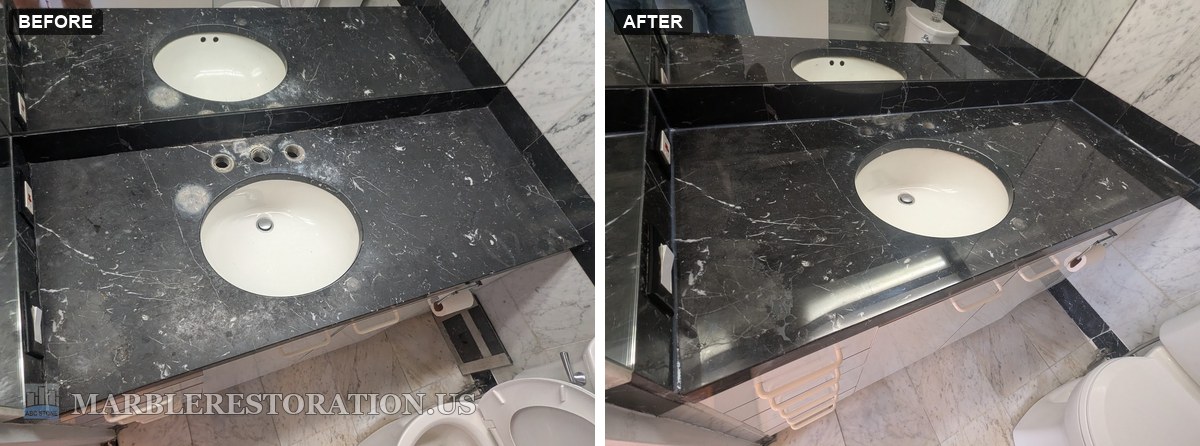
Nero Marquina that turned gray
Black marble is the least forgiving stone there is for this. Every etch, every water mark, every wipe with the wrong cleaner takes a bit of the polish off, light scatters where the polish is gone, and the eye reads it as gray. On a white Carrara top the same damage is half invisible. On Nero Marquina it looks like a film someone left behind, and no cleaner takes it off, because there is nothing on the surface. The surface itself is worn. It is the same thing I see on a single sink black vanity that fogged over.
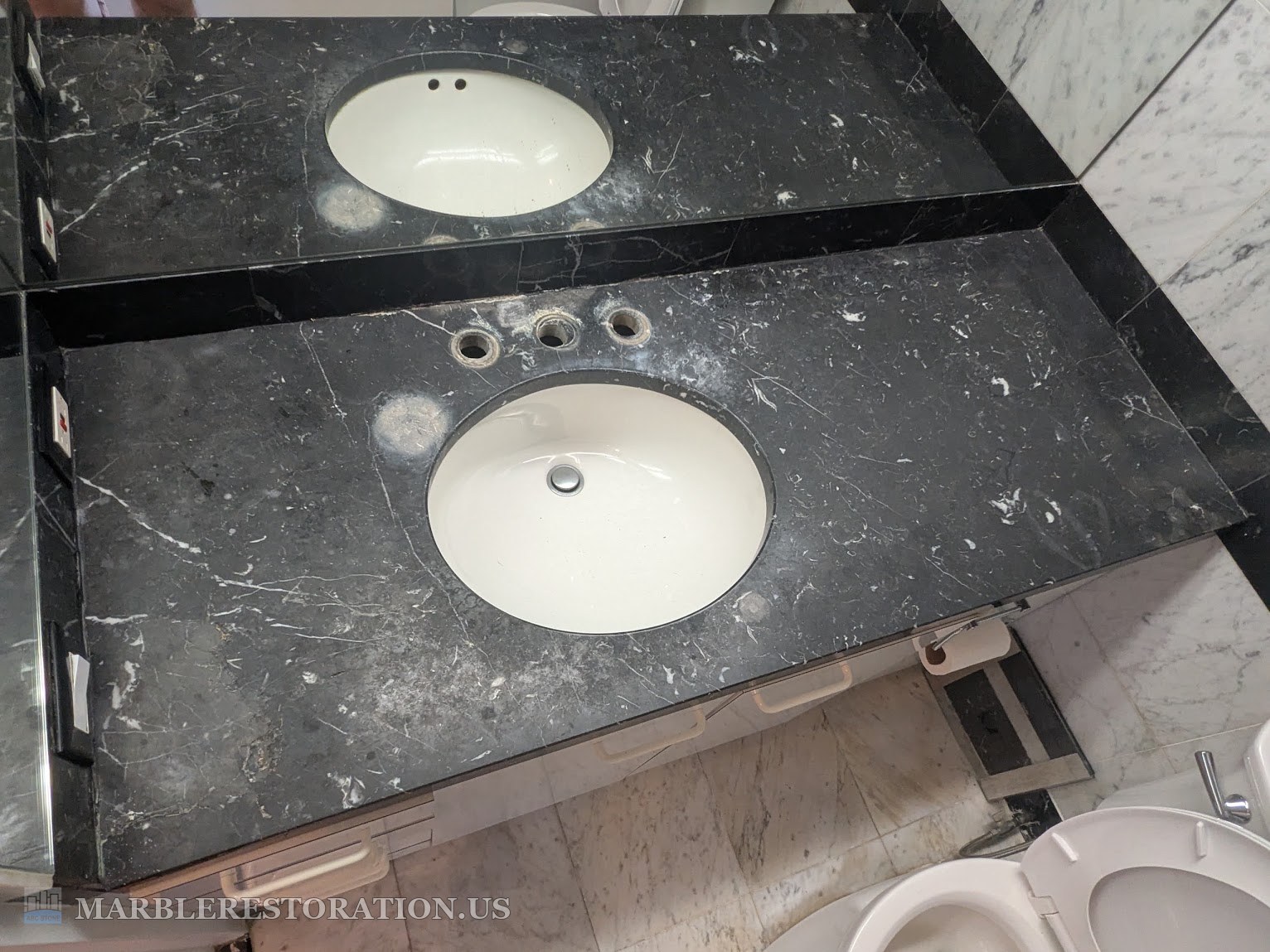
The faucet came off before I started
The owner asked whether I could take the stains out and polish right where the faucet sits, if they had it removed first. Yes, and it is the better way. Their handyman pulled the faucet the day before. That let me bring the whole deck down evenly, including the ring of staining under the faucet base. When a faucet stays on, I polish as close to it as the machine reaches, and the marble hidden under the base keeps its old worn finish.
The cracks were the part to decide on
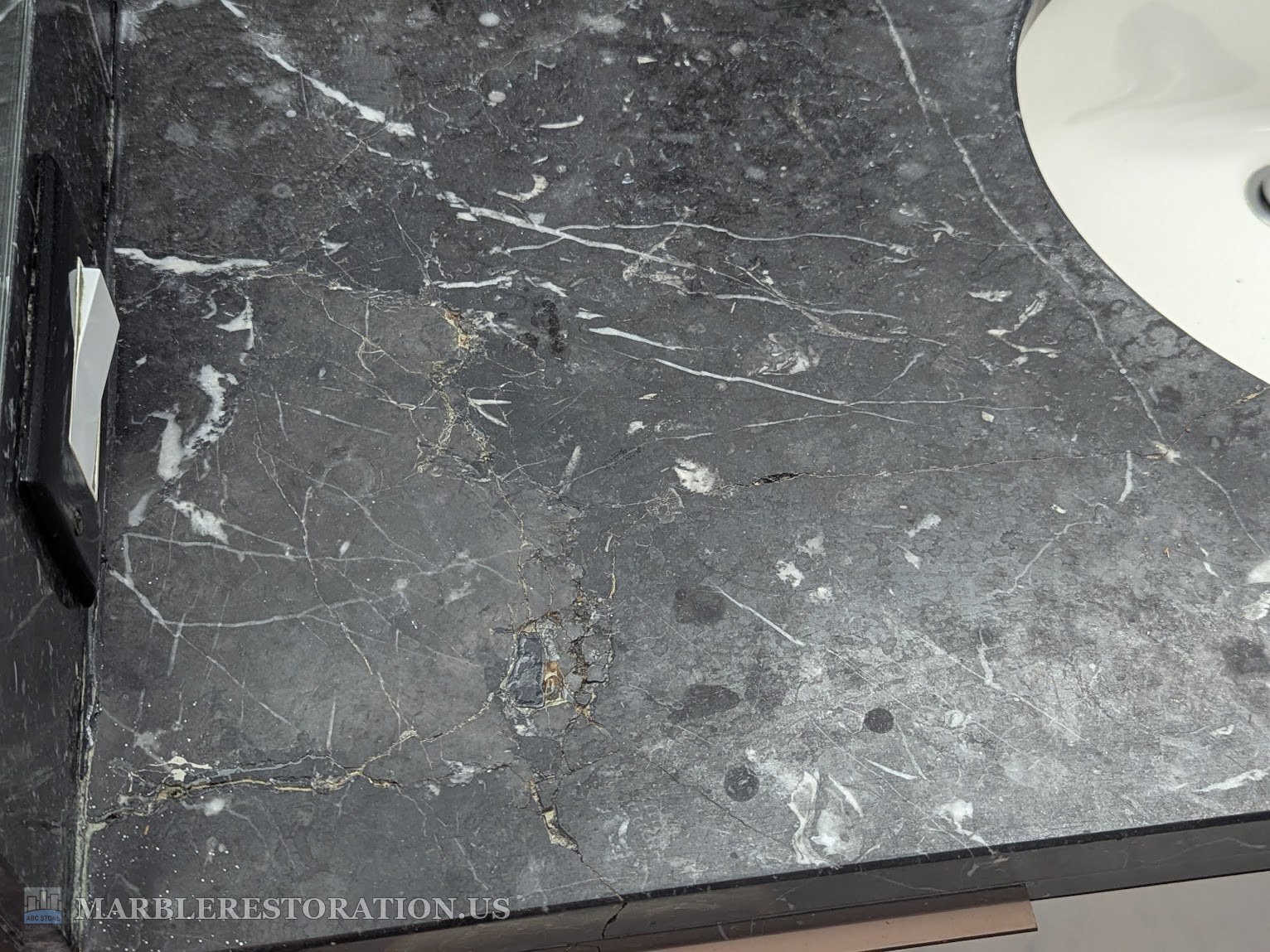
One end of the top had crumbling running through it with weak, soft little chunks sitting inside them. Polishing and buffing is a wet, dynamic process, so pieces like that come out from under the pads whether anyone plans it or not. The owner first wanted to skip the patching, because I had told them straight that patches can be seen and felt and may not last.
I still recommended doing it. Neither way is perfect, but black epoxy blends into Nero Marquina far better than any patch blends into light stone, and leaving open gaps in a top that is about to be polished wet is asking for a hole. So I pulled the loose chunks out myself, filled the cracks with black epoxy, and polished the top over them once they set. Taking them out on purpose beats losing them mid-polish.
How close to new black marble comes back
The owner asked a fair question, one I get often. After polishing, is it 80 percent of new, 90 percent, nearly new? On black marble a shine finish comes back close to new, around 90 percent. It will not be a brand new factory slab. Deep etches and deep scratches can stay a little noticeable after the polishing. Natural parts of the stone and the white veins shine differently than the pure black around them, so the top is not one even mirror, the same as on this polished black and white marble double sink vanity. And a fresh shine shows a new etch more clearly than a tired dull top did, which may surprise people a few months later.
The sealer, Aqua Mix Sealer’s Choice Gold, buys time against color stains. It does nothing at all for etches or gray spots, because those are acid damage to the stone, not color sitting in it. The filled cracks are a good example of the limit too. You can see them in the after photo, dark on dark, flatter than the stone around them, and you can feel them with a fingertip. That is as good as a patch gets, and it is better than a hole.
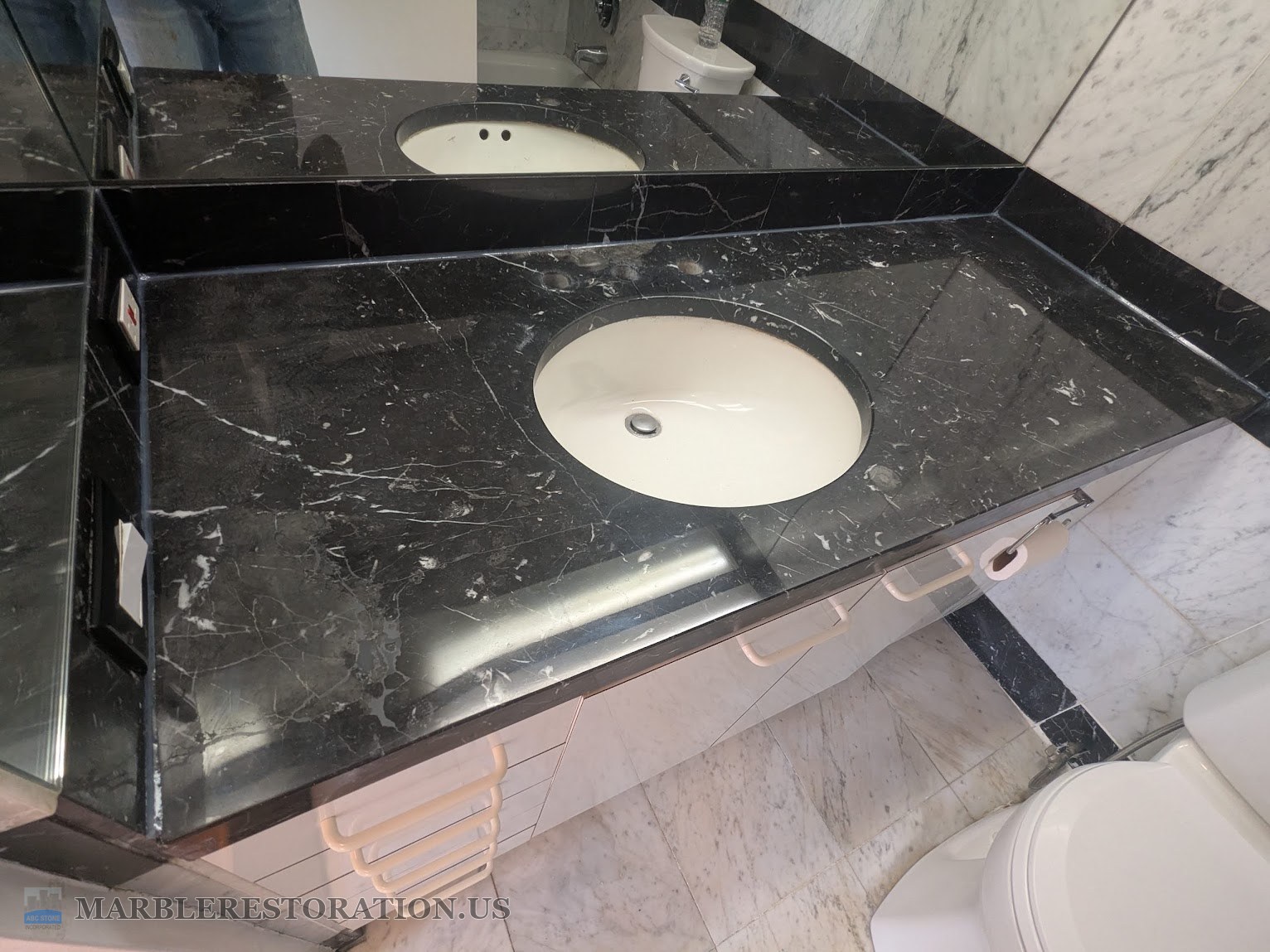
If your black marble vanity has gone gray
The backsplash was re-caulked with clear silicone at the end of the same visit. The silicone and the sealer both need about six hours to cure, so the top is left alone for the rest of that day, and the faucet goes back on after that. We are based in Brooklyn and work across Manhattan, and a bathroom vanity like this one is a single visit. If yours looks gray, send me photos of the whole vanity and your zip code and I will tell you what can come out and what will stay. Email info@marblerestoration.us.
Questions people ask about dull black marble vanity tops
Can dull gray spots be removed from black marble?
Most of them, yes. They are worn polish and light etching, so they come out with sanding and repolishing, not with cleaning. Deep erosion can stay a bit visible.
Do I have to take the faucet off?
No, but it helps. With the faucet off, the marble under the base gets the same finish as the rest. With it on, I work as close as I can and that spot stays as it was.
Should cracks in a vanity top be patched before polishing?
If there are loose pieces in them, yes. I pull the loose chunks out and fill the gaps with black epoxy first. The patch stays visible and can be felt, and it may not last forever, but the alternative is a piece tearing out during the polishing.
Submit Your Order or Ask a Question:
You'll get a response within a few minutes or hours and usually not longer than 24 hours.
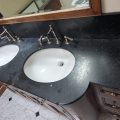 Dull Double Sink Vanity Old Marble
 Dull Marble Vanity Before Polishing
 Polished Caulked Double Sink Vanity
 Tarnished Botticino Dull Vanity before Refinishing
 Discoloration on Lackluster/Dull Brown Limestone Vanity
 Marble Vanity Restoration
 Banjo Vanity Double Sink Long Crack after Repair.
 Cracked Vanity. After Lifting and Repair
 Banjo Double Sink Vanity Crevice Caused by Metal Bar
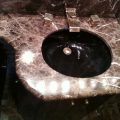 Polished Dark Emperador Vanity
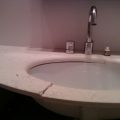 Cracked Vanity Hanging on Sink
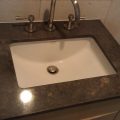 Brown Vanity Polished and Stains Removed
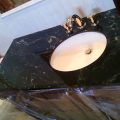 Restored Shine on Serpentine Marble Vanity
 Banjo Vanity Top Sagging Wing Repair
 Polished Glossy Marble Vanity
 Etches and Clouds on Tarnished Serpentine Marble Vanity
 Tiled Vanity Top. Rojo Alicante Marble
 Bathroom Vanity after Refinishing
 Brown Bathroom Vanity Etchings Removal
 Re Polished Double Sink Limestone Vanity
 Banjo Vanity Top Sag Fixed by Attaching to Wall
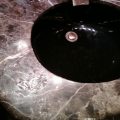 Dark Emperador Vanity with Deep Etch
 Splotchy White Etches & Burns on Brown Limestone Vanity
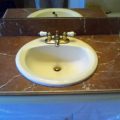 Tarnished Tiled Vanity Before the Repair. Rojo Alicante