
Black Granite Restoration Service
Granite is an igneous rock and not calcite-based stone and typically will not etch. If the etchings appeared on your granite, that means your granite more likely is “doctored”. “Doctoring” granite is a method of artificial dyeing granite by applying a compound to the surface and “baking” in an oven at high temperature to fuse the compound, for the only purpose of enriching the color and raising its price. The etches can happen on that coat and not on the granite itself. Unlike etches on marble, etches on doctored granite cannot be easily removed or polished.
Causes of Etchings on Doctored Granite
– acidic or alkaline substances react with the artificial coating
– improper cleaning products or methods damage the doctored surface.
Doctored Granite Etchings Preventive Measures
Verify Granite Authenticity:
– purchase granite from reputable suppliers who do not use doctoring methods
– ask for a certification of authenticity or documentation of the granite’s natural state
Use pH-Neutral Cleaners:
– just like with marble, use cleaners that are specifically designed for natural stone
– avoid acidic or alkaline cleaning products that can damage the doctored coating
Regular Sealing:
– apply a high-quality sealer designed for granite to protect the surface
– reapply the sealer according to the manufacturer’s recommendations
Avoid Harsh Chemicals:
– do not use bleach, ammonia, or any other harsh chemicals on doctored granite
– stick to mild, non-abrasive cleaners and soft cleaning cloths.
Immediate Spill Management:
– clean up spills immediately to prevent any potential reaction with the doctored coating
– use a blotting technique to clean spills rather than wiping to avoid spreading
Use Protective Measures:
– place coasters under glasses and cups to prevent rings
– use cutting boards and trivets to avoid direct contact with hot pots, pans, and knives.
Granite’s natural resistance to etching makes it a durable choice for surfaces, but doctored granite can be susceptible to damage. By understanding the nature of doctored granite and following preventive measures, you can maintain its appearance and ensure longevity. If etchings do occur on doctored granite, professional restoration might be necessary, as they cannot be easily removed or polished like those on marble.
Questions and Answers:
What is black granite and why is it popular?
Black granite, known by various names such as Black Absolute, Black Galaxy, Jet Black Granite, and Nero Absolute Granite, is a highly sought-after material for countertops and flooring due to its rich, deep black color and elegant appearance. It is prized for its durability and ability to enhance the aesthetic appeal of any space.
Why is restoration necessary for black granite surfaces?
Over time, black granite surfaces can become worn, dulled, and scratched due to regular use. Restoration is necessary to bring back the original shine and smoothness, ensuring the granite maintains its luxurious appearance.
What is etching, and how does it affect black granite?
Etching is a chemical reaction that occurs when acidic substances come into contact with granite, causing dull spots and surface damage. This is particularly noticeable on black granite, where etching can appear as light-colored marks or dull areas, detracting from its polished look.
What techniques are used in factory doctoring of black granite?
Factory doctoring involves several techniques aimed at enhancing the color, texture, or finish of black granite. These techniques can include “baking” the granite to achieve a deep black color and applying tints or resins to alter its natural characteristics.
How does factory doctoring affect the restoration process?
Factory doctoring can make restoration challenging because the artificial treatments applied at the factory are difficult to replicate. These treatments may alter the hardness or sheen of the granite, complicating the restoration process.
What makes restoring factory-doctored black granite challenging?
The primary challenge in restoring factory-doctored black granite is that the restorer cannot duplicate the exact processes used in the factory. This can result in differences in color and finish after restoration. Additionally, the artificial treatments may wear away unevenly, leading to inconsistent appearance.
How can these challenges be overcome during the restoration process?
To overcome these challenges, restorers should use high-quality polishing compounds and techniques tailored to the specific type of black granite. Testing a small, inconspicuous area first can help ensure that the chosen methods will achieve the desired results.
What are the differences between dry and wet granite polishing?
Dry granite polishing uses powder and can be done without water, making it less messy but potentially more prone to overheating. Wet granite polishing uses water to cool the pads and reduce dust, but it creates more cleanup. Both methods can be effective depending on the situation.
What tools and materials are needed for granite polishing?
Essential tools for granite polishing include buff polishing pads, polyester fiber pads, muslin wheels, and high-quality polishing compounds such as Dia-Glo or Tenax. Wet polishing pads are also useful for reducing heat and extending the life of the pads.
How to use granite polishing powder effectively?
To use granite polishing powder effectively, apply it to the granite surface and buff with a polishing pad in a steady, circular motion. For wet polishing, mix the powder with water and use a polyester fiber pad. Follow the product directions carefully to avoid excessive pressure.
What are the best granite polishing compounds on the market? Top granite polishing compounds include Dia-Glo Stone Polishing Compound and Tenax Granite Polishing Powder. These products are highly rated by professionals for their ability to restore granite to a factory-fresh finish.
What are the common mistakes to avoid when polishing granite?
Avoid using excessive pressure, which can damage the granite, and ensure the surface is completely dry before sealing. Follow product instructions carefully to avoid uneven results.
What products are recommended for daily maintenance of granite?
Regular cleaning with a high-quality stone cleaner like Lustro Italiano Stone Cleaner helps maintain the finish. Avoid harsh chemicals and abrasive cleaners that can damage the granite. Regularly using a product like can help maintain the shine and cleanliness of the granite.
What are common cleaning mistakes that can damage black granite?
Using acidic cleaners like citrus-based solutions or vinegar can cause etching. Additionally, using abrasive scrubbers or cleaners that strip away the sealant can lead to long-term damage and dullness.
What preventive measures can you take to protect black granite surfaces?
- Always use coasters and trivets to protect from hot pans and acidic foods.
- Clean spills immediately.
- Regularly reseal the granite to maintain its protective layer.
- Avoid placing heavy or sharp objects directly on the granite.
When should you call a professional for black granite restoration?
If your granite has deep scratches, significant etching, or persistent dullness that DIY methods can’t fix, it’s time to call a professional. Professionals have the tools and expertise to restore your granite to its original condition.
Before & After
Black Granite Chap Fracture By Sink
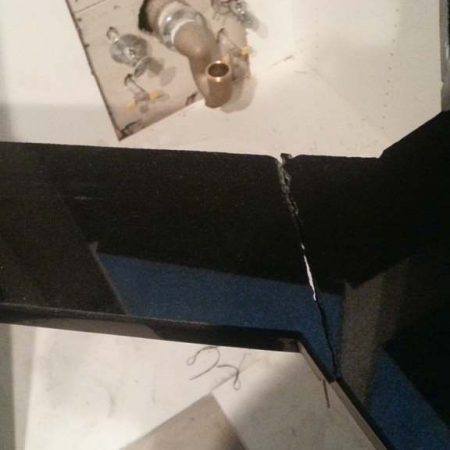
Cutout for sinks or cook-top are weakest areas on a counter, and the most potential spots more...
Fixed Crack on Black Absolute Countertop
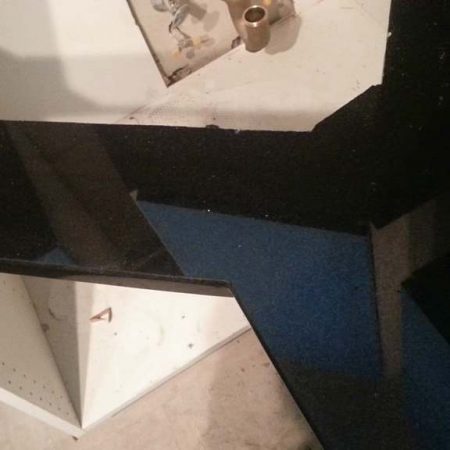
In contrast to marble, granite will not interact with the crystallizer. At the root, the term more...
Dull Spots & Scuff Marks on Black...
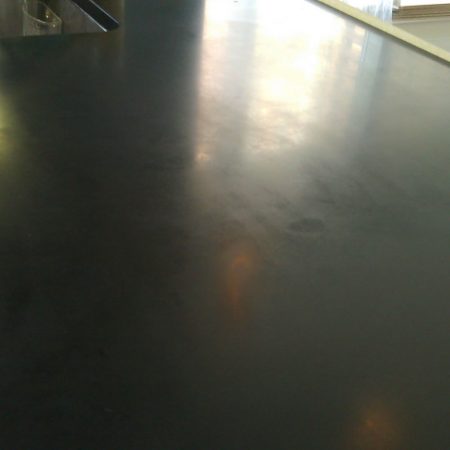
Although the black absolute granite is one of the hardest of granite, its surface still can more...
Semi-Gloss on Black Countertop
The hardest black absolute granite polishing may take 2-3 times longer than polishing regular/soft marble. more...
Splotchy Gray/Black Granite with Black Opaque...
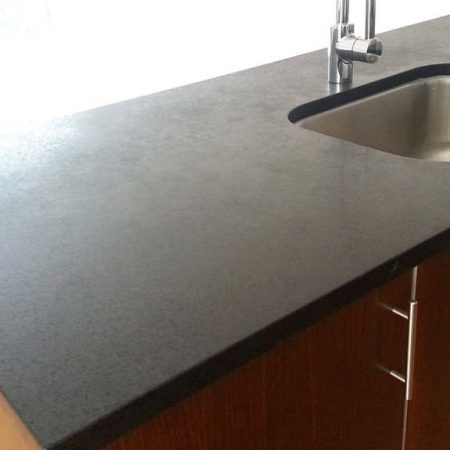
Granite as a finishing material has a lot of advantages: it has a variety of colors, more...
Rehoned Gray Granite with Black Flakes...
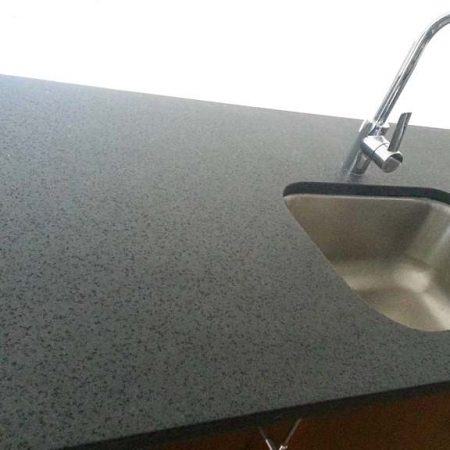
The semi-shine finish gives to surface intermediate between honed and gloss finish. more...
Black Granite Seam Before Flattening
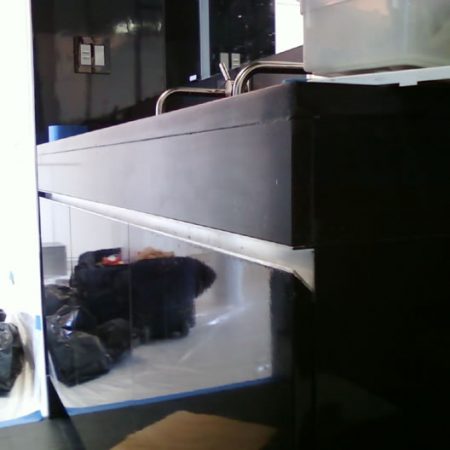
The black absolute counter was unevenly installed with the lip between top and lower panel. more...
Black Absolute Granite. Lip Flattening...
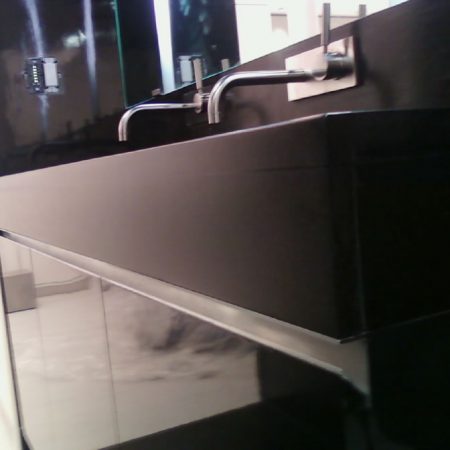
The initially the top edge and the vertical panel were installed uneven (with a lip), we more...
Splotchy Black Granite Counter Recession...
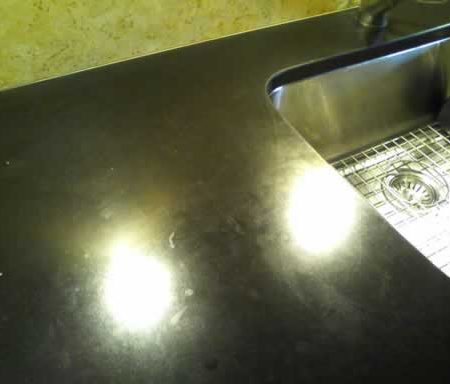
Often a black granite got marks similar to etchings, but actually the granite cannot be etched more...
Black Granite Counter Smoothed and Polished
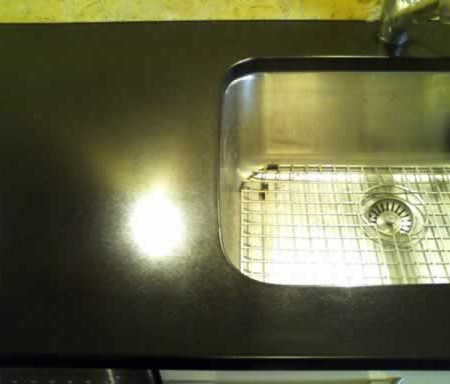
Although the black granite cannot be polished and treated to "factory-like" gloss finish, it can get more...
Splotchy Black Absolute Countertop. Before...
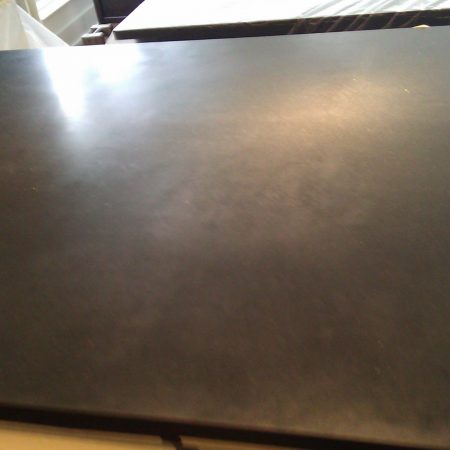
Granite is unlike a marble for the care and cleans up. Granite is much harder than more...
Revived Gloss on Black Absolute Granite...
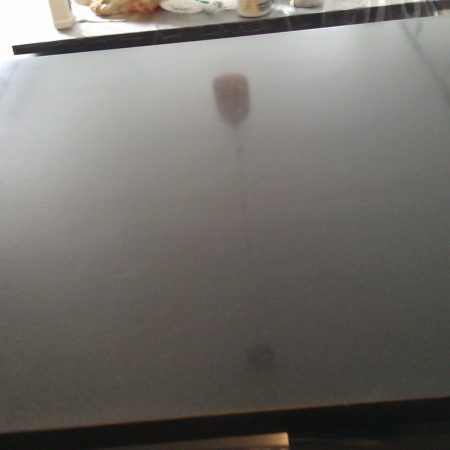
To polish black absolute we use the full set of diamond pads starting from 500 and more...
Wax Peeled Off on Black Galaxy...
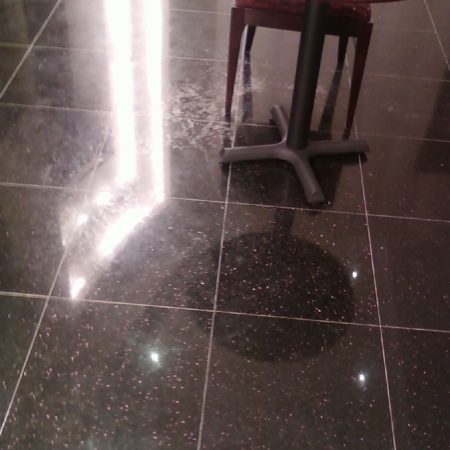
Black galaxy or black absolute granite in most cases have an excellent shining degree and doesn't require any more...
Pure Black Galaxy Granite. Wax...
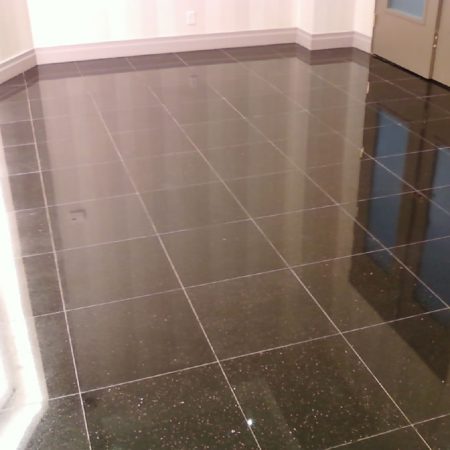
Wax finish was stripped in one night with wax dissolver and floor machine equipped with coarse more...
Black Absolute Counter Buckling and Splitting...
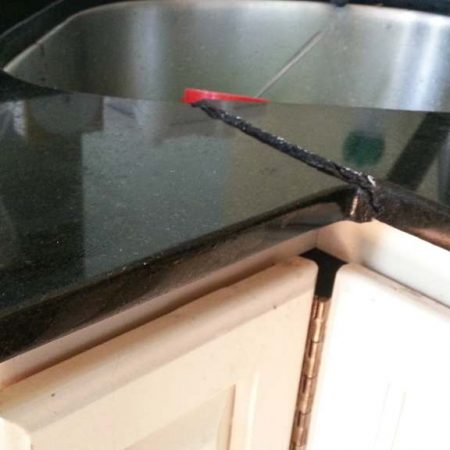
Granite crevice repair is quite a demanded service, which we are performing constantly. As a rule, more...
Black Absolute Granite Unnoticeable Crack...
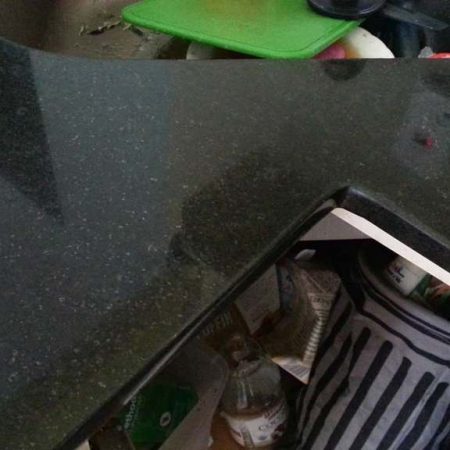
Cracks in granite are repaired by filling up with epoxy to glue pieces back together. But more...
Pale Black Absolute before Seam...
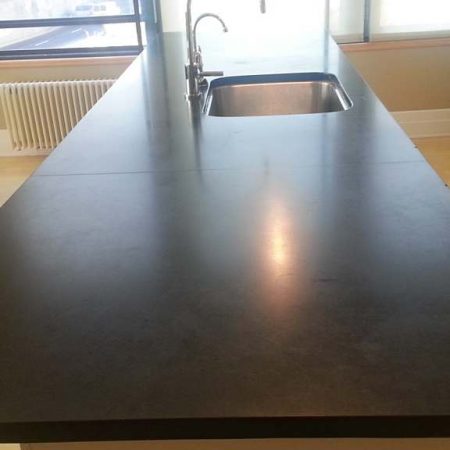
Granite countertops - the most practical choice for a kitchen. They are not reacting with acids more...
Semi Shine Finish Black Absolute...
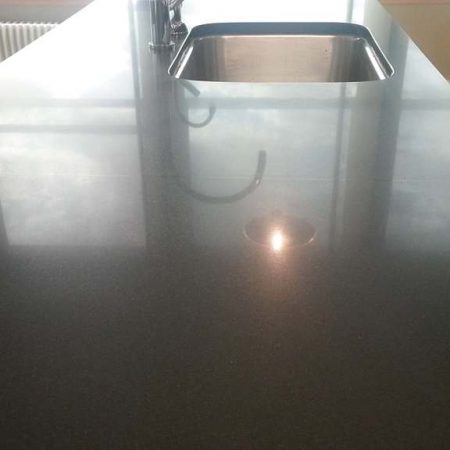
Granite polishing is usually done with an abrasive tool, it gradually move from a grinding tool more...
Submit Your Order or Ask a Question:
You'll get a response within a few minutes or hours and usually not longer than 24 hours.