
Rusted Rod Cracks in Countertops Repair
Many homeowners are surprised to find a sudden crack appearing along the narrow strip of stone in front of their kitchen sink. This common issue is rarely a fault of the stone itself but rather a result of a hidden structural component: the internal metal reinforcement rod. These rods are designed to provide structural reinforcement during the handling process, they can eventually become the primary cause of stone failure if they begin to rust. This oxidation leads to expansion, which creates enough internal pressure to crack the granite from the inside out.
Why is there a rod in my granite?
“Rodding” is a standard industry practice used to strengthen granite or marble during the most vulnerable stages of its life: transportation and installation. Because the area around a sink cutout is thin and fragile, fabricators cut a groove into the underside of the stone and embed a rod to prevent it from snapping while being moved or set into place.
Once the countertop is securely installed on your cabinets, these rods serve virtually no purpose for daily use. The cabinets provide the necessary structural support, leaving the rod dormant inside the stone.
The Science of the “Rust Burst”.
The problem begins when water penetrates the stone or the seams around the sink. If a standard carbon steel rod was used, moisture causes the metal to oxidize and rust. As iron turns to rust, it expands significantly, exerting tremendous internal pressure on the granite. Since granite is a rigid material with no room to “give”, the expanding metal eventually forces the stone to split, resulting in the characteristic crack seen in the “before” images.
Prevention and Better Alternatives.
To avoid the costly “Full Repair” process, which involves detaching broken pieces and physically removing the oxidized metal, the preventative measures are essential.
Proper Caulking: The most critical defense is maintaining a perfect seal. Re-caulking around the sink with clear silicone is vital to stop water from reaching the internal rod.
Material Selection: Modern standards suggest moving away from carbon steel.
– Fiberglass Rods: These provide the necessary tension during transport but are completely immune to rust.
– Stainless Steel: Though more expensive, stainless steel rods offer high strength without the risk of corrosion-induced expansion.
Professional Restoration.
If your countertop has already cracked due to a rusting rod, a simple surface patch in most cases won’t suffice. A permanent fix requires detaching the broken piece and removing the rusted metal rod to stop the expansion at its source. Once the rod is removed, the stone can be reset with specialized colored epoxy and re-polished to restore its finish.
Request a free estimate for Cracks in Countertops Repair:
Rusted Rod Cracks Repair – Before & After
Front Sink Crack in Granite
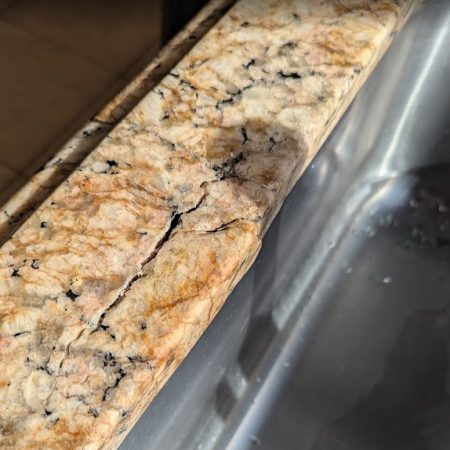
A granite countertop with a visible crack near the front of a sink. The fissure runs more...
After Front Sink Crack Repair
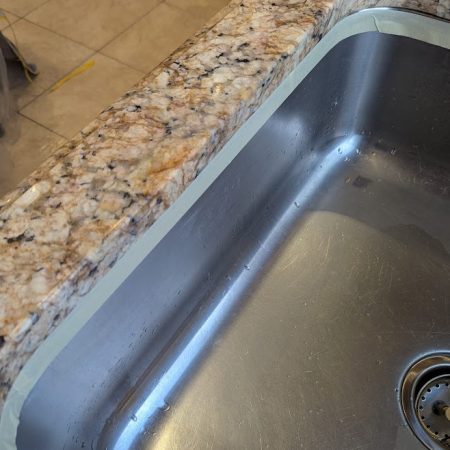
The image showcases the aftermath of a seamless granite countertop repair above a kitchen sink. Originally more...
Crack in Front of Sink in Ubatuba Granite...
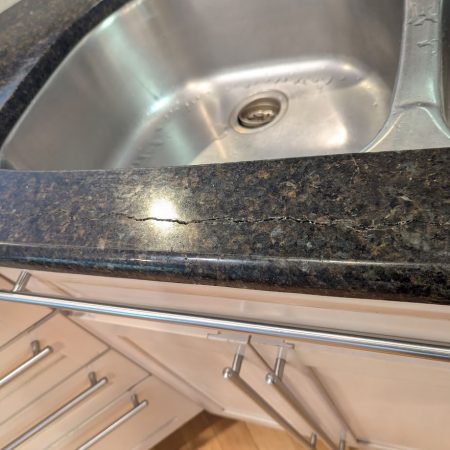
The image shows a significant crack on the front edge of a Ubatuba granite countertop, positioned more...
Fixed Crack in Front of Sink in Ubatuba...
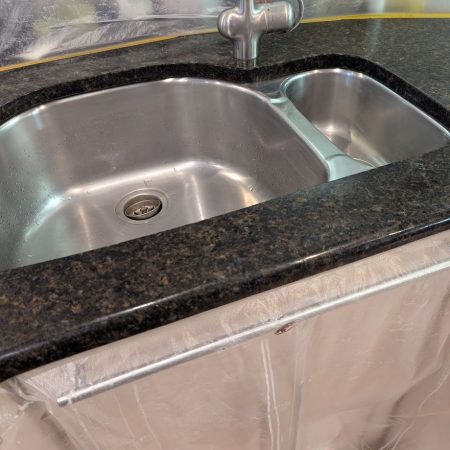
The image showcases a beautifully repaired Ubatuba granite countertop in front of a kitchen sink. The more...
Granite Countertop Metal Rod Removal

This granite kitchen countertop developed a long crack along the sink area due to a rusting more...
Fixed Granite Countertop After Metal...
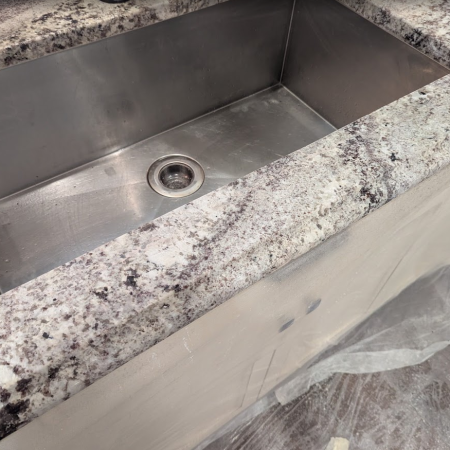
The granite countertop was successfully restored by carefully breaking apart the cracked section and removing the more...
Metal Rod Rusting Issue in Granite...
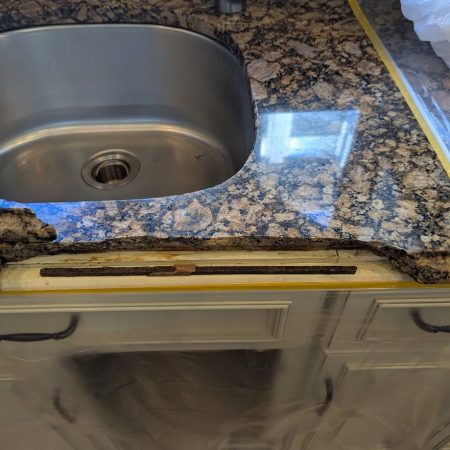
This "before" image highlights a common structural failure in granite countertops: a significant crack running along more...
Metal Rod Removed and Crack Fixed
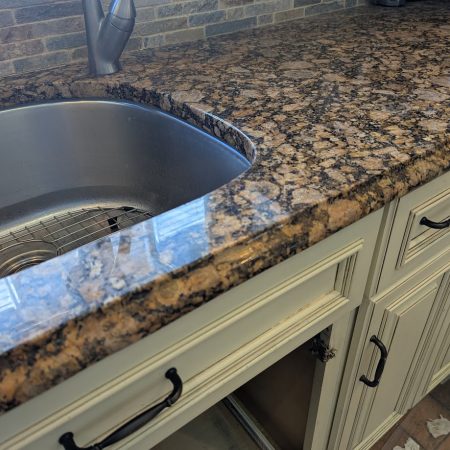
The "after" image showcases the successful restoration of the granite countertop following our comprehensive repair process. more...
Granite Countertop Cavity / Crumbling by the Sink
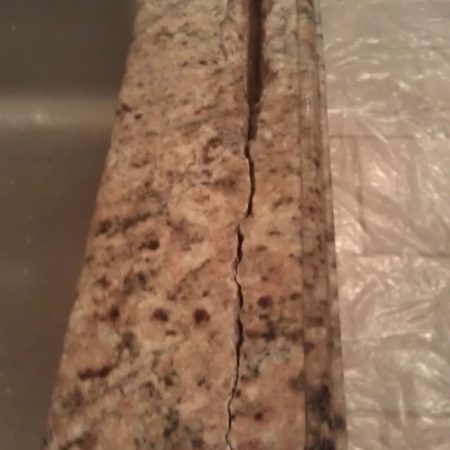
Spalling and cracking on granite is a very common problem, especially in areas like by a more...
Countertop Crack on Front by Sink Repair
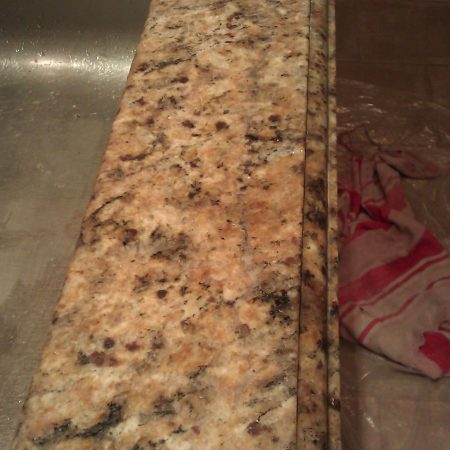
We expanded the crack a little in order to better clean up inside rust, and dry more...
Chip on Surface Caused by Metal Rod
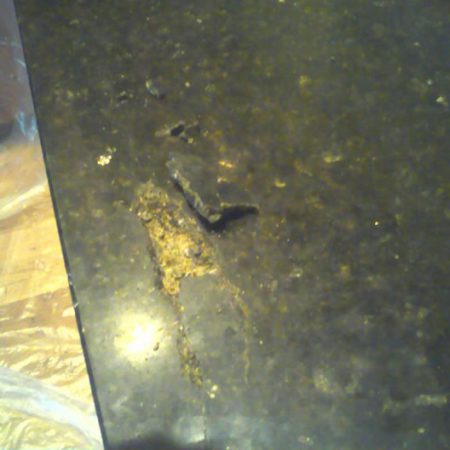
To strengthen a weak part of the countertop stone fabricators use metal rods/bars for the purpose more...
UbaTuba Countertop Crack on Top Surface...
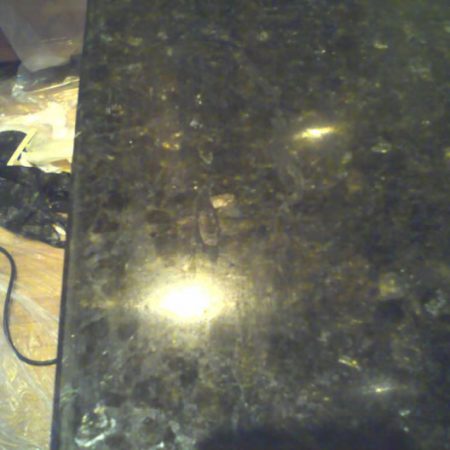
The crack was forced out by rusted and expanded metal bar inside of the granite. more...
Submit Your Order or Ask a Question:
You'll get a response within a few minutes or hours and usually not longer than 24 hours.