
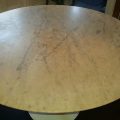
Travertine Square Coffee Table Before Restoration – Dull and Worn
This square travertine coffee table shows the characteristic dullness that develops when the stone’s surface polish wears away. The natural beige tones and fine veining of the travertine are still present, but the surface has lost its reflective quality entirely. Watermarks left circular outlines across the stone, and fine scratches are visible on the flat top.
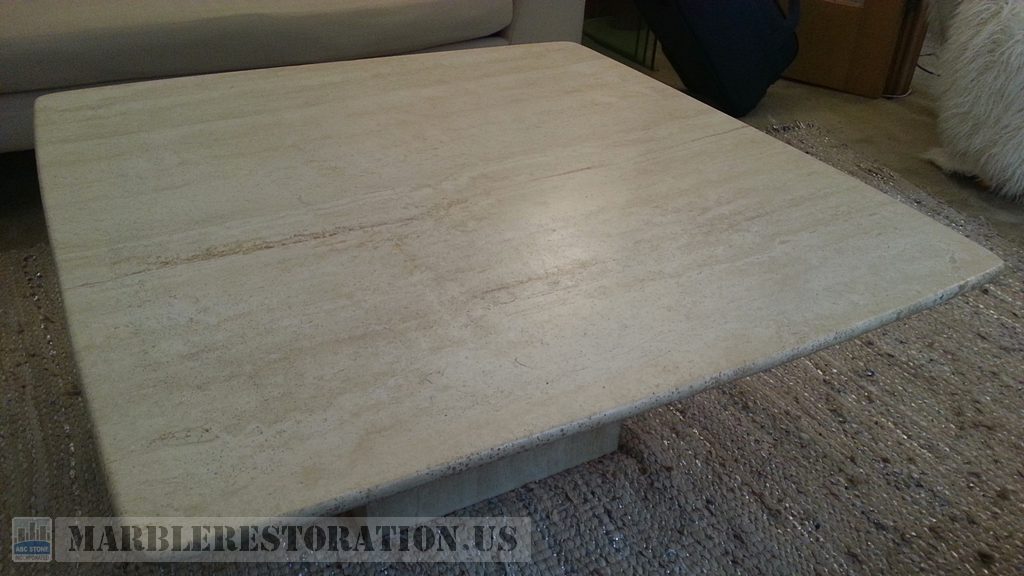
Travertine is a sedimentary limestone known for its warm, neutral tones and characteristic pore structure. It takes a high polish well, but cleaning products and general use gradually erode that finish until only a flat matte remains. Unlike granite, travertine is a soft stone and shows surface fatigue relatively quickly without periodic maintenance.
The type of dulling seen here calls for tabletop restoration that includes honing to remove scratches and watermarks, followed by polishing to bring back the reflective finish. The edges also benefit from this process, as they tend to pick up more impact-related wear than the flat surface.
Once the surface is restored, sealing the travertine helps slow the return of these issues. Travertine is porous and unsealed stone absorbs spills easily, so a quality impregnating sealer applied after polishing is the standard final step.
Submit Your Order or Ask a Question:
You'll get a response within a few minutes or hours and usually not longer than 24 hours.
 Polished Round Marble Coffee Table with Glossy Finish
 Fogging on Black Marble Single Sink Vanity Before Resurfacing
 Clean Crack Travertine Cocktail Table
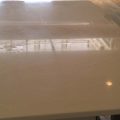 Dupont Corian Kitchen Island with Specks and Dull Spots Before Restoration
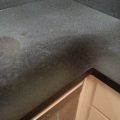 Dull Black Corian Countertop with Watermarks Before Cleaning
 Unpolished White Carrara Bathroom Floor – Honed Matte Surface
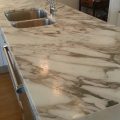 Calacatta Gold Marble Countertop with Spotting Finish Imperfections
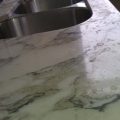 Dull Specks and Etching Burns on White Marble Kitchen Countertop
 Crema Marfil Marble Vanity After Nick Removal and Edge Repair
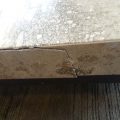 Broken Edge Travertine Marble Table
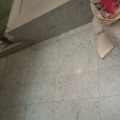 Dull Marble Rectangular Tiles in Bathroom Floor Before Reconditioning
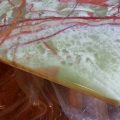 Fixed Corner Breakage on Green Onyx Coffee Table
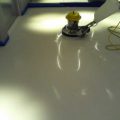 Porcelain Floor Tile Buffing and Shine Restoration in Progress
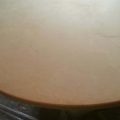 Round Beige Limestone Coffee Table after Crack Repair and Refinishing
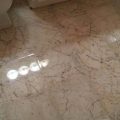 White Carrara Marble Bathroom Floor After Polishing and Re-Grouting
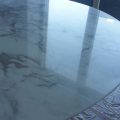 Cloudy Dull Spot Removed On Table Surface
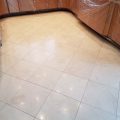 Dull Kitchen Floor Before Cleaning and Polishing
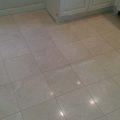 Crema Marfil Kitchen Dull Floor
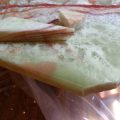 Onyx Coffee Table Broken Off Corner
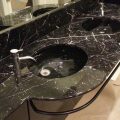 Nero Marquina Black Marble Double Sink Vanity after Professional Polishing
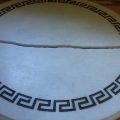 Cracked Greek Meander Border Marble Table Before Crack Repair
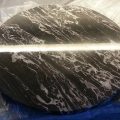 Nero Black Portora Round Marble Table – Unnoticeable Cracks After Repair
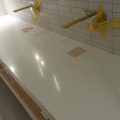 DuPont Corian Restroom Countertop After Professional Polishing
 Dull Spots Knoll Round Table