
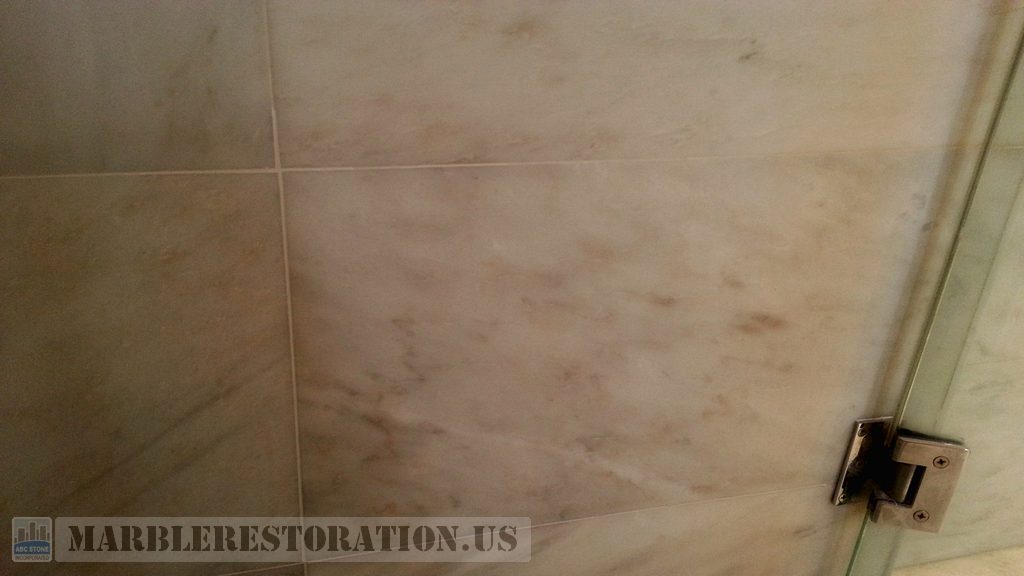
Marble Shower Wall with Yellow Spill Stains after Partial Removal
This marble shower wall shows residual yellow stains that remained after an initial removal attempt. Despite efforts to address the discoloration, faint remnants are still visible across the large tile panels, showing as uneven patches against the otherwise uniform surface.
Yellow stains on marble shower walls are typically caused by organic spills, iron oxidation in the stone or water supply, or chemical reactions from cleaning products used over time. The majority of the staining here has been lifted, but traces persist in the pores of the stone – particularly in areas where the marble was not sealed beforehand or where the staining had time to set.
The underlying marble surface retains its structure and natural veining. The damage is surface-level, which means further targeted treatment can reduce or eliminate the remaining discoloration. Depending on the stain origin, this may involve poultice application, light honing, or a combination of both.
Yellow stains driven by iron or organic matter respond well to poultice-based treatments: an absorbent powder is mixed with a stain-drawing chemical and applied to the affected area, sealed with plastic, and left to pull the stain out of the stone as it dries. This process may need to be repeated more than once for deeply set marks. On beige or cream marble, this approach is preferred over bleach-based methods, which risk discoloring the stone itself.
After stain removal, sealing the marble is an important preventive step. A good impregnating sealer slows the rate at which liquids penetrate the stone, buying more time for cleanup before a spill becomes a stain – critical in wet environments like shower walls where the stone is exposed daily.
Submit Your Order or Ask a Question:
You'll get a response within a few minutes or hours and usually not longer than 24 hours.
 Yellow Stains on Marble Shower Wall Before Removal
 Spill Color Stains on Shower Wall Removed
 Coffee Machine Undesired Stains Removal
 Mold Removal Shower Shelf
 Mildew on Shower Soap Niche/Shelf after Removal
 Erosion Shower Border Removal
 White Carrara Marble Countertop after Acid Etch Drops Removal and Honing
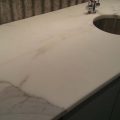 Marble Vanity After Etched Rings Removal and Surface Honing
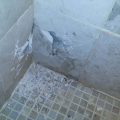 Crumbled Wall Tiles Replacement Shower
 Dents and Chips Removal on Statuary White Marble
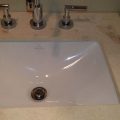 Efflorescence Beige Limestone Vanity
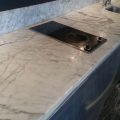 Dirty Stains Counter
 Coffee Machine Stains Extracted
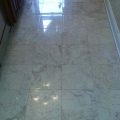 Tiled Kitchen Marble Floor Shine Finish
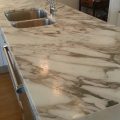 Calacatta Gold Marble Countertop with Spotting Finish Imperfections
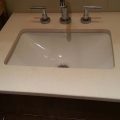 Efflorescence Removal From Beige Limestone Vanity
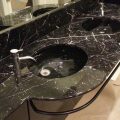 Nero Marquina Black Marble Double Sink Vanity after Professional Polishing
 Ceramic Tub Wall before Re-grouting and Re-caulking
 Crema Marfil Nick Removal
 Black Marble Double Sink Vanity with Crack – Before Repair
 Soap Tray on Porcelain Shower Wall Before Cleaning
 Efflorescence Specks Shower Shelf
 Corian Shower Panels Holes Patching
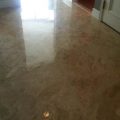 Buffed To Shine Finish Marble Foyer Floor